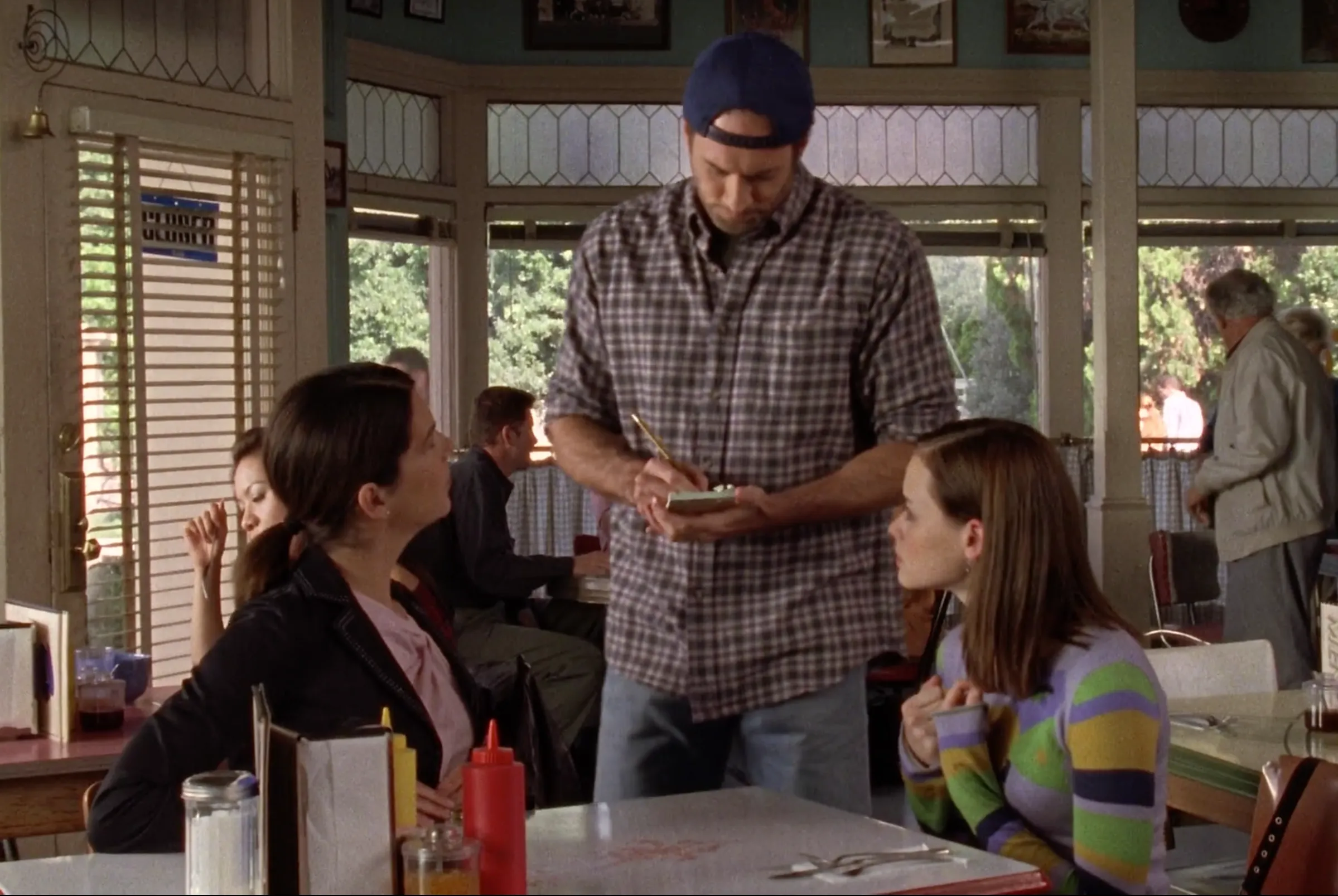

Gilmore Girls - Lorelai Gilmore (part one)
a psychological deep dive
People who love Gilmore Girls can all come in agreement that the characters are well written and make the show as perfect as it is. And we love Rory and Lorelai Gilmore.. right? Well, I thought this was a universal shared opinion. But I suppose this is where the fandom seems to grab their gear to settle down in different camps. Personally I don’t think there is such a thing as liking or disliking either of them. These characters are so extremely complex that putting a simple like button on them just seems too black and white. I think that the complexity of their relationship and them as individuals is what makes the show so alluring to me. Let me break my psychological deep dive down.
Lorelai Victoria Gilmore
Lorelai is introduced as a 32 year old bubbly, chatty coffee-addict. She is the mother of Lorelai (Rory) Gilmore, who she gave birth to at the age of 16. Making her the first teenage mom in Stars Hollow. As the daughter of Emily and Richard Gilmore, Lorelai grew up in a wealthy household where status and expectations got prioritized over her development as an individual.
Since we don't know much about her prior childhood, we shall take a look at the development of a sixteen year old. For this example I will be using Erik Erikson's theory.
Erik Erikson believes that every person goes through multiple crises in life. There is a corresponding crisis for every stage of life. If the person does not get through this crisis well enough, it will affect the crisis in the next phase. At the age of 16 a person comes into the stage of Identity vs Role confusion. This stage is the transition between childhood and adulthood, where the primary goal is to develop a sense of self. The big question in this phase is: Who am I? If a person at this age gets pushed into a specific role, they might experience role confusion. This can lead to insecurity, withdrawal or a negative identity (behaving the opposite way of what is expected).
It is safe to say that Lorelai has experienced role confusion. Something that has always struck me is how Lorelai never left her rebellious stage towards her parents. This has made me wonder how much of her personality is made up out of her starry ways. In later seasons, she realizes she has more similarities to her mother than she would like to admit, Her behavior has not changed much, yet I feel that her rebellion isn't as vocal and hostile as it used to be in the earlier seasons, almost as if she is starting to accept it.
There is definitely more to it, especially with Rory growing up and leaving her side. Rory (Lorelai Leigh Gilmore, named after herself) is her daughter and most importantly her ''best friend''. Their relationship is portrayed as the ideal mom and daughter bond. Most people wouldn't even turn their heads and will see them as two best friends living their lives, equals. But their bond has always come across as unhealthy in my eyes because the line between mom/daughter and best friends seems to fade. Making it unclear who in their relationship is the actual caregiver. To come back to Erik Erikson's theory and the failed stage of Identity vs Role confusion, one of the biggest effects is having unstable relationships. Not only not being able to settle down (sounds familiar with her many boyfriends?) but also hyperfocusing on a specific person in your life. In her case, Rory.
Rory being the same age as her when she got pregnant, falls into the same life phase. I think that the first fracture of Rory forming her own identity is not sharing her first kiss with her mom. Which upsets Lorelai and brings much confusion. In later seasons we see Rory making independent (sometimes questionable) choices where Lorelai repeats her own mom's words ''this is not how I raised you''. And so the cycle continues.
Thank you for reading part one of my psychological deep dive. Let me know what you think of it by sending me a message on my home page <3
Erikson, Erik H. Identity and the Life Cycle (1959/1980)